Periodization and Programming: A Simple Guide
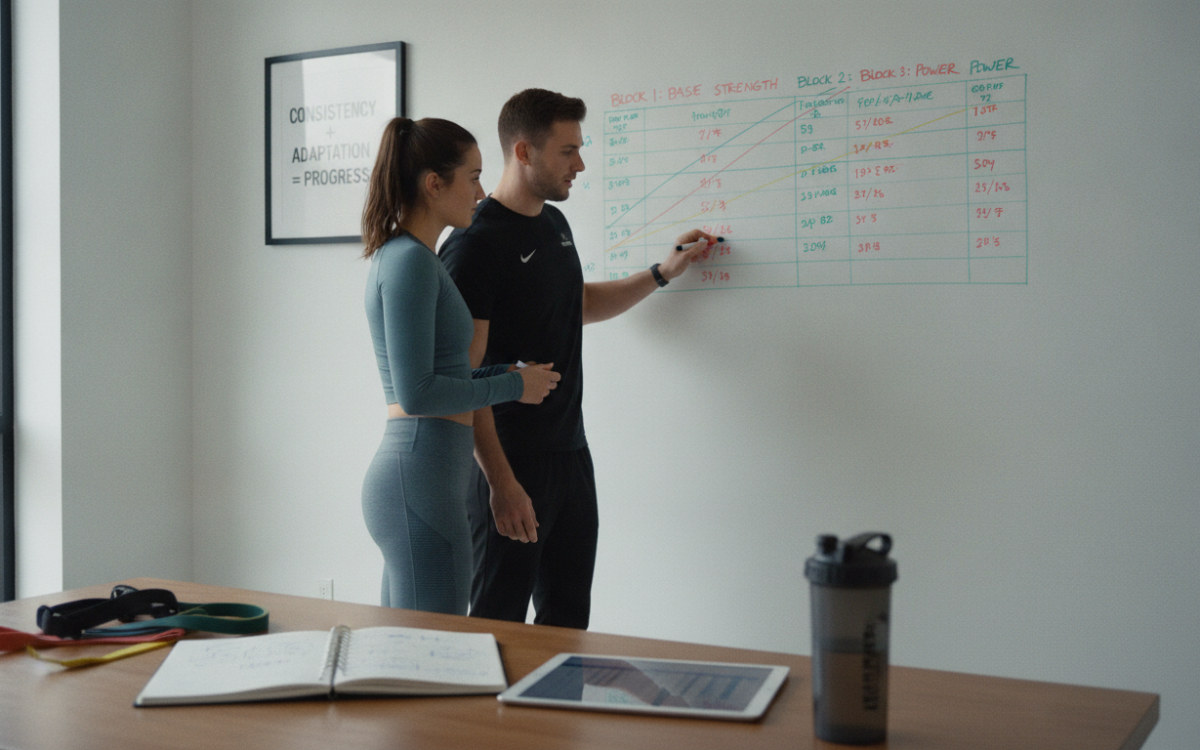
Quick answer: Periodization and programming is the planned way you split training into phases over time. It changes your sets, reps, and intensity in cycles. This helps you build strength, avoid plateaus, and recover well. It turns random workouts into a smart, step by step plan.
Key Takeaways
- Periodization and programming breaks your training into planned phases over weeks and months.
- It helps prevent plateaus by changing intensity and volume on purpose.
- Beginners can start simple, while advanced lifters use more complex cycles.
- Rest and recovery are a built in part of good programming.
What is periodization and programming?
Periodization and programming is a planned way to organize your workouts over time. Instead of doing the same thing every week, you change your effort in cycles. Some weeks push hard. Other weeks pull back. This keeps your body growing.
Think of it like a road map. You know where you start. You know where you want to go. The plan fills in the steps between. Because of this, your training has purpose.
Many people train with no plan. They lift the same weights for months. Then they wonder why nothing changes. A good program fixes that problem.
How does periodization and programming work?
It works by changing two main things over time. Those are volume and intensity. Volume means how much you do. Intensity means how hard you go. You shift these in waves.
For example, you might start with lighter weights and more reps. Over weeks, you add weight and drop reps. Then you take an easy week to recover. After that, you start a new cycle at a higher level.
There are a few common styles:
- Linear: You slowly add weight week by week.
- Undulating: You change reps and weight often, even day to day.
- Block: You focus on one goal for a set block of weeks.
Each style has its place. The best one depends on your goals and your schedule.
Why does periodization and programming matter?
It matters because your body adapts to stress. When you lift, you create a small challenge. Your body repairs and gets stronger. But if the challenge never changes, you stop growing.
Periodization and programming keeps the challenge fresh. It also builds in rest. That lowers your risk of burnout and injury. For example, the planned easy weeks let your joints and muscles recover.
Also, a clear plan keeps you focused. You stop guessing. You know what to do each day. That makes it easier to show up. Regular exercise supports your heart, bones, and mood. You can read more about activity guidelines at the CDC.
How do you start periodization and programming?
Start simple. You do not need a fancy spreadsheet. Pick a goal first. Maybe you want more strength. Maybe you want more muscle. Your goal shapes the plan.
Next, pick how many days you can train each week. Be honest. Three good days beat five rushed ones. Then set a time frame. Many people use a four to six week cycle.
Here is a basic path:
- Weeks one and two: Moderate weight, higher reps.
- Weeks three and four: Heavier weight, fewer reps.
- Week five: Easy week to recover.
After that, repeat with slightly heavier weights. This simple loop is real periodization and programming in action.
Common mistakes to avoid
One big mistake is skipping the easy weeks. People think rest means losing progress. In truth, rest is when you grow. Good programming always plans for it.
Another mistake is changing your plan too often. Give a cycle time to work. Switching every week hides your results. You never learn what helps.
Also, do not copy a pro athlete’s plan. Their body and schedule are different. Your periodization and programming should fit your own life. Start where you are.
Who should use periodization and programming?
Almost anyone who trains can benefit. Beginners gain from the structure. It teaches good habits early. However, you can keep it very basic at first.
Intermediate and advanced lifters need it even more. Their bodies adapt fast. Without a plan, they stall. Smart cycles help them keep moving forward.
Even if you just want to stay healthy, a light plan helps. It keeps you steady and safe. Because of that, you are more likely to stick with it long term.
Simple tips for lasting progress
Write your plan down. A note on your phone works fine. Track your weights and reps. This shows your progress over time.
Also, listen to your body. If you feel wrecked, take an extra rest day. A plan should guide you, not trap you. Sleep well and eat enough. These support every part of periodization and programming.
Ready to train with a plan? Pick one simple cycle and try it for a few weeks. Keep notes and adjust as you go. Before starting any new fitness program, talk to your doctor first.
Frequently Asked Questions
What is the difference between periodization and programming?
Periodization is the big picture plan that splits training into phases over months. Programming is the fine detail, like the exact sets, reps, and weights each day. They work together. Periodization sets the direction, and programming fills in the daily steps to get there.
How long should a training cycle last?
Most cycles run four to six weeks, then include an easy recovery week. Beginners can keep cycles short and simple. Advanced lifters may use longer blocks. The right length depends on your goals, recovery, and how fast your body adapts to the training load.
Can beginners use periodization and programming?
Yes, beginners can use a simple version. Start with one easy cycle that slowly adds weight over a few weeks. You do not need complex plans at first. Basic structure teaches good habits, builds strength safely, and helps you stay consistent over the long run.
Do I need rest weeks in my program?
Yes, rest weeks are important. They let your muscles, joints, and nervous system recover from hard training. Skipping them raises your risk of burnout and injury. A planned easy week is not lost progress. It is often when your body grows the strongest.
How often should I change my workout plan?
Give each cycle a few weeks before changing it. Switching too often hides your results and makes progress hard to track. Once a cycle ends, adjust weights or reps and start again. Steady, gradual changes work better than constant random switching.
For more, see our Fitness articles.
This article is for general information only. It is not medical advice. Talk to your doctor before you make changes to your health routine.