Gut Microbiome and Probiotics: A Simple Guide
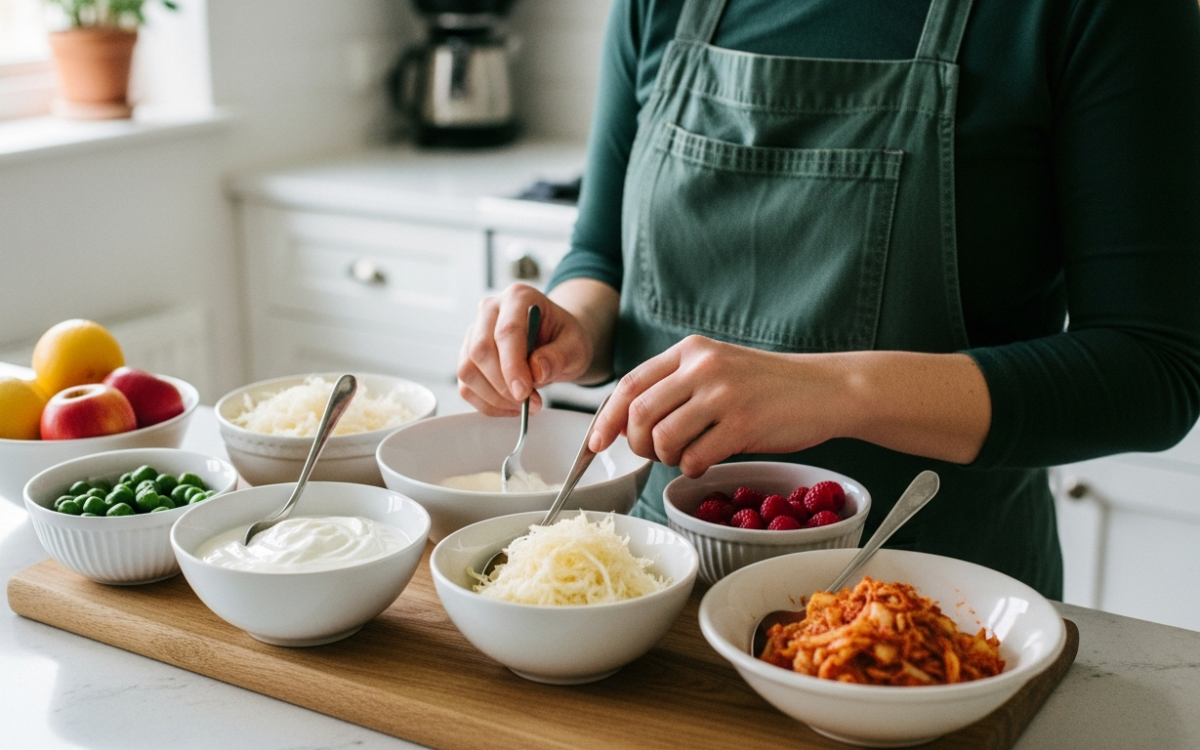
Quick answer: The gut microbiome and probiotics work together to support digestion and health. Your gut holds trillions of bacteria. Probiotics are live good bacteria found in foods like yogurt. Eating them may help balance your gut and support how you feel each day.
Key Takeaways
- Your gut is home to trillions of tiny bacteria that help your body.
- Probiotics are live good bacteria found in fermented foods and supplements.
- Fiber feeds the good bacteria and helps them grow.
- A balanced gut may support digestion, mood, and your immune system.
What is the gut microbiome and probiotics connection?
The gut microbiome and probiotics are closely linked. Your gut holds trillions of tiny living things. Most are bacteria. Some are helpful. A few can cause trouble. Together they make up your gut microbiome.
Probiotics are live good bacteria. You get them from certain foods and supplements. They add to the helpful bacteria already inside you. That is why the gut microbiome and probiotics belong in the same conversation.
Why does your gut health matter?
Your gut does more than break down food. It also plays a role in your immune system. It helps make certain vitamins. It even talks to your brain.
When your gut bacteria are balanced, you may feel better. Digestion runs smoother. However, when the balance is off, you might feel bloated or tired. Poor diet, stress, and some medicines can upset the balance.
Because of this, many people want to care for their gut. The good news is that small changes can help a lot.
How do probiotics work in the body?
Probiotics work by adding good bacteria to your gut. This can help crowd out the bad bacteria. Some probiotics also make helpful compounds that feed your gut lining.
Not all probiotics are the same. Different types do different jobs. That is why one product may help one person more than another. Research on the gut microbiome and probiotics is still growing. For trusted, current details, you can check NIH.
Also, probiotics do not stay forever. You need to keep eating them. Think of it like watering a garden.
Best foods for the gut microbiome and probiotics
You do not need pricey pills to feed your gut. Many everyday foods do the job. Fermented foods are packed with live bacteria.
- Yogurt with live cultures
- Kefir, a drinkable fermented milk
- Sauerkraut, which is fermented cabbage
- Kimchi, a spicy fermented dish
- Miso and tempeh from soy
These foods support the gut microbiome and probiotics balance in a natural way. Start slow if you are new to them. Too much at once can cause gas.
Do not forget prebiotic fiber
Probiotics need food too. That food is fiber, also called prebiotics. Fiber feeds the good bacteria and helps them grow.
Good fiber sources include oats, bananas, onions, garlic, beans, and apples. Eat a mix of plants each week. More variety means more types of good bacteria.
How can you build a healthier gut?
You can build a healthier gut with simple daily habits. Focus on real food first. Then add small steps over time.
Here are easy ways to care for the gut microbiome and probiotics balance:
- Eat more plants, whole grains, and beans
- Add one fermented food to your day
- Drink enough water
- Cut back on heavy sugar and junk food
- Sleep well and manage stress
Also, move your body often. Exercise may support a healthy gut too. However, give your gut time to adjust. Changes take weeks, not hours.
Are probiotic supplements worth it?
Probiotic supplements may help some people, but food comes first. If you take antibiotics, a probiotic might help your gut recover. Still, quality varies a lot between brands.
Look for products that list the bacteria types and amounts. Check the expiration date too, since the bacteria must be alive to work. When in doubt, ask a health professional what fits your needs.
Common myths about gut health
Many myths surround the gut microbiome and probiotics. One myth says all bacteria are bad. That is false. Most gut bacteria help you.
Another myth says more probiotics are always better. That is not true either. Balance matters more than big amounts. Your gut thrives on variety and steady care, not extremes.
Also, no single food fixes everything. A healthy gut comes from your whole diet and lifestyle over time.
Simple next steps
Start small this week. Add one fermented food. Eat one extra plant each day. Drink more water. These little moves add up.
Caring for the gut microbiome and probiotics is a slow but rewarding habit. Be patient and kind to your body. Over time you may notice better digestion and more energy.
Ready to feed your gut? Pick one tip and try it today. Talk to your doctor before making big diet changes or starting any supplement.
Frequently Asked Questions
What are probiotics in simple terms?
Probiotics are live good bacteria that help your gut. You find them in fermented foods like yogurt, kefir, sauerkraut, and kimchi. They add to the helpful bacteria already in your body. Eating them regularly may support digestion and overall gut balance in a natural, gentle way.
How long does it take to improve gut health?
It usually takes a few weeks to notice changes. Your gut bacteria shift slowly as you eat more fiber and fermented foods. Stay steady with your habits. Quick fixes rarely work. Give your body time and keep feeding the good bacteria every day for the best results.
Can I get enough probiotics from food alone?
Yes, many people get enough probiotics from food. Fermented foods like yogurt, kefir, kimchi, and sauerkraut are rich in live bacteria. Eating a variety of these often can support your gut. Supplements are optional and may help in some cases, such as after taking antibiotics.
What is the difference between probiotics and prebiotics?
Probiotics are live good bacteria you eat. Prebiotics are fiber that feeds those bacteria. Both matter for the gut microbiome and probiotics balance. Get probiotics from fermented foods and prebiotics from plants like oats, onions, garlic, bananas, and beans. Together they help good bacteria grow strong.
Are probiotics safe for everyone?
Most healthy people can take probiotics safely. However, people with weak immune systems or serious illness should be careful. Some may feel gas or bloating at first. Start slow and watch how you feel. If you have health concerns, talk to your doctor before starting any probiotic supplement.
For more, see our Nutrition & Diet articles.
This article is for general information only. It is not medical advice. Talk to your doctor before you make changes to your health routine.