Mood Disorders Explained: Depression and Bipolar
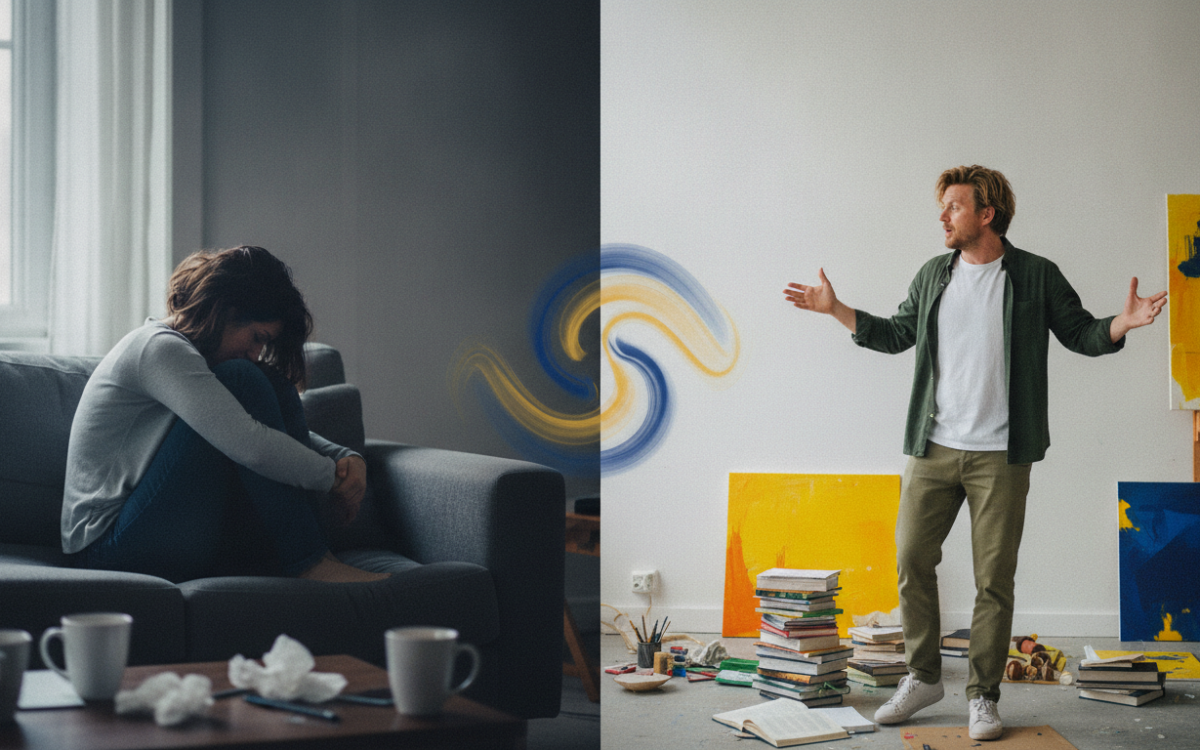
Quick answer: Mood disorders are mental health conditions that change how you feel over time. The two main types are depression and bipolar disorder. They affect mood, energy, and daily life. With treatment like therapy and medicine, most people with mood disorders feel better.
Key Takeaways
- Mood disorders include depression and bipolar disorder.
- Depression brings deep sadness and low energy that lasts weeks.
- Bipolar disorder causes shifts between low moods and high, restless moods.
- Treatment often mixes therapy, medicine, and daily habits.
- Help works, so reach out early if symptoms last.
What are mood disorders?
Mood disorders are mental health conditions that change how you feel for a long time. They go past a normal bad day. The feelings stick around for weeks or more. They can make work, sleep, and friendships hard.
The two most common types are depression and bipolar disorder. Both are real medical problems. They are not a sign of weakness. Also, they are very common. Millions of people live with them.
What causes mood disorders?
Mood disorders come from a mix of things. There is no single cause. Your brain chemistry plays a part. So do your genes. Life stress can also set them off.
- Family history of mental illness
- Big life changes or loss
- Long term stress or trauma
- Some medical conditions
- Changes in brain chemicals
Because the causes vary, treatment is not one size fits all. A doctor can help find what fits you.
What does depression feel like?
Depression brings deep sadness and low energy that lasts for weeks. It is more than feeling down. It can steal your interest in things you once loved.
Common signs of depression include:
- Feeling sad or empty most days
- Tired all the time
- Trouble sleeping or sleeping too much
- Changes in appetite
- Trouble focusing
- Feeling worthless or guilty
These are part of many mood disorders. If they last more than two weeks, it may be time to talk to someone.
How is bipolar disorder different?
Bipolar disorder causes big swings in mood, energy, and behavior. It is one of the more complex mood disorders. People shift between low periods and high periods.
The low periods look like depression. The high periods are called mania or hypomania. During a high, a person may feel very happy or very restless. They might sleep little, talk fast, or take risks. However, these highs are not the same as simply feeling good.
These shifts can last days or weeks. They are not just normal mood changes. That is why a proper diagnosis matters so much.
How are mood disorders treated?
Most mood disorders are treated with a mix of therapy, medicine, and daily habits. Treatment works well for many people. The goal is to ease symptoms and help you feel like yourself again.
Talk therapy helps you spot patterns and cope. Medicine can balance brain chemicals. For bipolar disorder, mood stabilizers are often used. For depression, antidepressants may help.
Healthy habits also support recovery. For example, regular sleep, movement, and social time all help. You can learn more about mental health from the NIH. Because everyone is different, your plan may take time to get right. Be patient with the process.
When should you get help?
Reach out if low or high moods last more than two weeks. Also get help fast if you have thoughts of harming yourself. That is an emergency.
You do not need to wait until things feel very bad. Early help makes recovery easier. Talking to a doctor is a strong first step, not a last one. Mood disorders respond best when treated sooner.
Living well with mood disorders
Many people with mood disorders live full, happy lives. The key is steady care and support. Lean on people you trust. Keep up with treatment even on good days.
Small routines help a lot. Try to sleep and wake at the same time. Move your body when you can. Cut back on alcohol, since it can make symptoms worse. Also, track your mood so you notice early changes.
Recovery is not always a straight line. Some days feel hard. That is normal. What matters is that you keep going and keep asking for support.
If you think you or someone you love has a mood disorder, do not wait. Reach out today. Talk to a doctor or mental health professional to find the right care for you.
Frequently Asked Questions
Are mood disorders the same as feeling sad sometimes?
No. Everyone feels sad or happy at times. Mood disorders last much longer and are more intense. They affect sleep, energy, and daily life for weeks or more. Normal sadness passes on its own, but mood disorders often need treatment to get better.
Can mood disorders be cured?
Most mood disorders cannot be fully cured, but they can be well managed. With therapy, medicine, and healthy habits, many people feel much better and stay stable for years. Treatment helps control symptoms so you can live a full, active life.
Do mood disorders run in families?
Yes, they often do. If a close family member has depression or bipolar disorder, your risk is higher. However, genes are not the only cause. Stress, trauma, and brain chemistry also play a role. Having a family history does not mean you will get one.
How are mood disorders diagnosed?
A doctor or mental health professional asks about your feelings, sleep, energy, and daily life. They may use questionnaires and rule out other health problems. There is no single blood test. A careful talk over time helps them give an accurate diagnosis and plan.
Can lifestyle changes help mood disorders?
Yes. Good sleep, regular movement, and social support all help. Cutting back on alcohol also matters. These habits do not replace treatment, but they support it. Together with therapy and medicine, healthy routines can make symptoms easier to manage day to day.
For more, see our Mental Health articles.
This article is for general information only. It is not medical advice. Talk to your doctor before you make changes to your health routine.